

Conservation expert explains where humans went wrong with our treatment of wolves, the reintroduction of wolves to Yellowstone, and describes the amazing results as balance is restored to entire ecosystems.
WE WERE WRONG ABOUT WOLVES, SAYS CONSERVATION EXPERT
Twenty-five years ago, humans changed the path of Yellowstone National Park for the better. One action changed the soil, the growth of plants and grasses, and the diversity and populations of wildlife throughout the park. It even changed the way the rivers flow. And all we did was bring back wolves. Jamie Rappaport Clarkm President and CEO of Defenders of Wildlife, played a critical role in the reintroduction of gray wolves to the Northern Rockies. Here’s their story.

SEVENTY YEARS WITHOUT WOLVES CHANGED YELLOWSTONE
On January 12, 1995, a motorcade of two park service patrol cars and a truck hauling a horse trailer made their way toward Yellowstone National Park. They stopped at the stone Roosevelt Arch so everyone could take photos under the inscription – “Yellowstone National Park. Created by act of Congress on March 1, 1872. For the benefit and enjoyment of the people.”
Inside the trailer were eight gray wolves from Canada. “Getting them there was one of our most extraordinary achievements – to right the wrongs that occurred 70 years earlier.” says Jamie Rappaport Clark, President and CEO of Defenders.org.
In a little over a decade – from 1914 to 1926 – humans eliminated 136 wolves that lived within the park. This was before we understood the connectedness of wildlife – before we knew the value of intact ecosystems. Before we knew about climate change and biodiversity and loss. Wiping out an apex predator in the park turned out to be a major mistake.
Seventy years without wolves changed Yellowstone – songbirds left, elk and coyotes became overpopulated and beavers disappeared. Elks overgrazed the land and trees, such as willow and aspen. Without those trees, songbirds began to decline. Beavers could no longer build their dams, and streams began to erode and degrade the conditions willow trees needed to grow. Without beaver’s dams and the shade from trees and plants, water temperatures were too high for cold water fish.
In 1973, the Endangered Species Act was passed, and the gray wolf was one of the first species listed as endangered, mandating protection and recovery planning. The long path to recovery in the United States for the wolf had begun. But it was a slow one. It took decades for Americans to come around on wolf reintroduction.
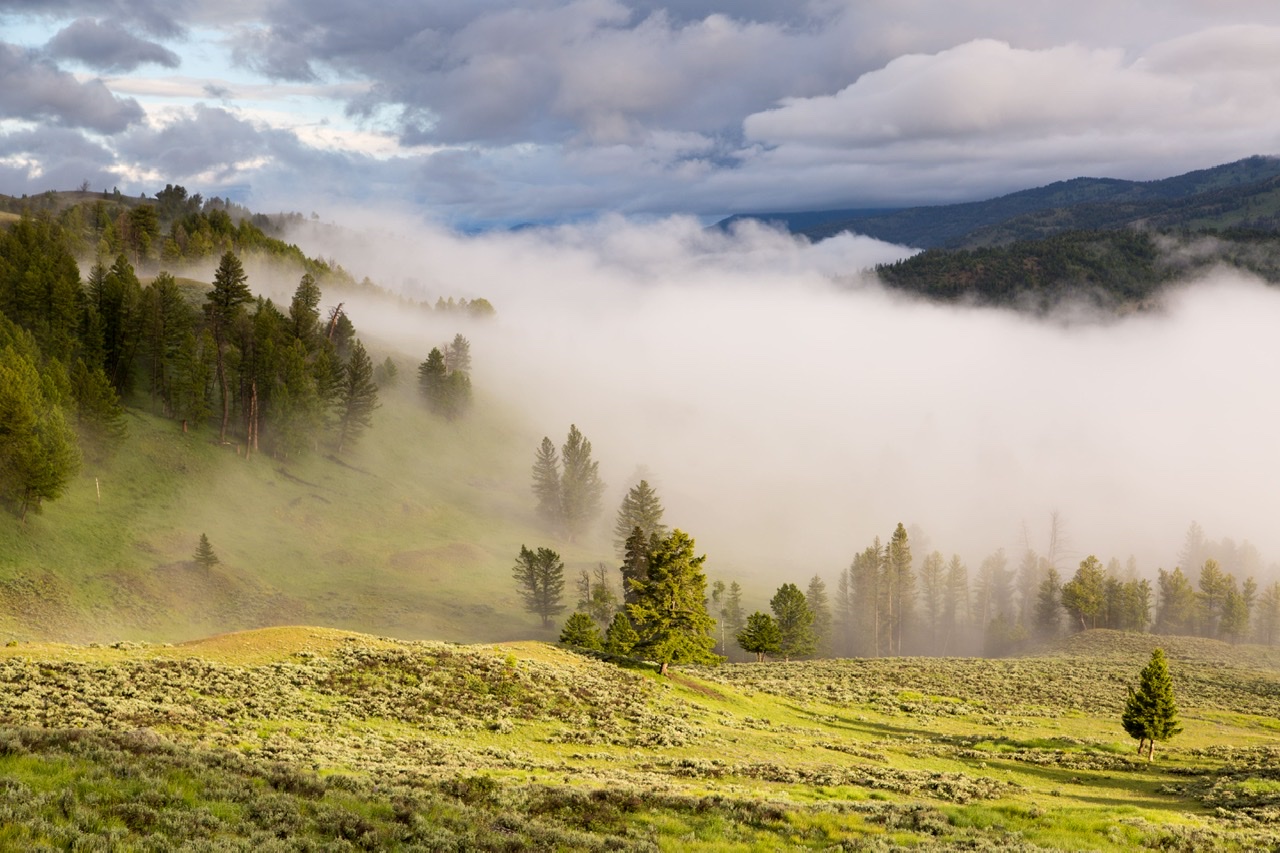
DEFENDERS OF WILDLIFE PLAYED VITAL ROLE IN THE REINTRODUCTION OF GRAY WOLVES TO THE NORTHERN ROCKIES
Defenders of Wildlife advocated for return of wolves in the midst of proposals, scoping periods, environmental impact statements, public comment periods and draft rulemakings. Many years of advocacy was needed to change people’s misperceptions to ensure the future of the wolf in the U.S.
With a lot persistence, it happened. Then-Secretary of the Interior Bruce Babbitt, then-Director of U.S. Fish and Wildlife Service Mollie Beattie and then-Superintendent of Yellowstone National Park Mike Finley, set the first wolf crate on the ground in Yellowstone National Park 25 years ago.
The changes in the park have been exciting and significant. Wolf reintroduction caused unanticipated change in Yellowstone. It rebalanced elk and deer populations, allowing the willows and aspen to return to the landscape. The end to overgrazing stabilised riverbanks and rivers recovered and flowed in new directions. Songbirds returned as did beavers, eagles, foxes and badgers. And, while the restoration of wolves in Yellowstone has cost about $30 million total, wolf ecotourism brings in $35 million annually.
This is not only a celebration of wolves and the success of the Endangered Species Act, it is a victory for humans and our planet. The mistake we originally made with the gray wolf was a big one, but our effort to correct that mistake is a beacon of hope.
We face sobering challenges in sustaining life on our planet. The Arctic is at a tipping point, so is the Amazon. We’ve lost 3 billion birds in North America and 1 million species are threatened with extinction within decades. But the gray wolf proves that we can evolve. Over the past 25 years, sustained by the Endangered Species Act and supported by changing public attitudes, wolves have returned to their historical range in the Northern Rockies and the Pacific Northwest, restoring balance to those ecosystems. And the story is not over. We have exciting opportunities to restore gray wolves to Colorado and California, to recover red wolves in the Southeast and to rebuild Mexican gray wolf populations in the Southwest.
“Wolves have let us rewrite the history of who we are as people. They are a symbol of the America we want to create – where we can coexist peacefully with wildlife – for their benefit and ours.”
Source: Defenders.org
UNIQUE FRIENDSHIP BETWEEN WOLF AND BEAR DOCUMENTED BY FINNISH PHOTOGRAPHER: Bear and wolf strike up unlikely partnership as photographer captures both animals sharing a meal on several nights.

Wolves are one of the most beautiful, intelligent, and majestic creatures on Earth. Wolf populations are, however, under pressure. If you love wolves and want to take action to help protect them and their environments, there are a host of different ways you can do this. You can take hands on action by volunteering, or you can act as an advocate for wolves online and in person. If you have some spare cash you can make a donation to support a conservation and wildlife charity.
Getting Involved Directly
-
1Volunteer at a wolf sanctuary. A great way to help look after wolves, while raising awareness about the destruction of their natural environment, is to volunteer at a wolf sanctuary. Search online to see if there is one near you. You are more likely to find a local sanctuary if you live in a state that has wild wolves.[1]
- Research the sanctuary and get in touch with them saying you’d like to volunteer.
- Volunteer roles can be competitive, so you will have to show why you are a good choice.
- Volunteering schemes can vary from evenings and weekends to placements where you are on site for a few weeks, perhaps over a whole summer.
- Volunteers in sanctuaries will generally do a wide-variety of things, such as cleaning out enclosures, feeding the animals, working in the gift shop, and conducting tours.
-
2Volunteer in the wild. If you would prefer to get out into the open country, there are a number of organisations that have volunteer programmes where you can do just that. Search for wolf preservation volunteering online and look for programmes that involve hiking or cycling in the country. You may camp and be asked to take photos of the environment, while acting as a positive spokesperson for wolves.[2]
- You should understand that you are very unlikely to actually come into contact with any wolves.
- You will most likely be tasked with maintaining the environment, assisting with daily jobs, and talking to visitors about wolves.[3]
- This is a great way to experience the outdoors, meet new people, and help to save wolves all at the same time.
-
3Help an organisation with their work. Another way to volunteer is to help an organisation with their office work, as well as their campaigning, fundraising and outreach work. Search for the offices of wolf and wildlife charities that you could travel to, and contact them. Explain what motivates you, and what skills and experience you have that can help.
- Volunteers are vital for many charities, so don’t be shy about getting in touch.[4]
- Volunteering like this can also be great way to develop all sorts of skills and experiences that help you develop.
- It might not seem as exciting as being in a sanctuary or out in the country, but a successful campaign needs people in the office.
-
4Attend an event or meeting. A great way to get involved in a movement to help protect wolves is to attend events and meetings that take place. There may be events locally that you can attend in order to hear people talking about the situation and what needs to be done. This is also a great way to meet people who know a lot about wolves and who can help you get more involved.
- This may involve going to local Town Hall meetings, or other such events, and speaking up about the plight of wolves.
- If your state has a lot of pressing issues to do with wolves, you may find debates and listening sessions about relevant legislation and regulation that you can attend.
- Look on the websites of wolf charities for lists of upcoming events.[5]


Speaking Up For Wolves
-
1Talk to friends and family. You can become an advocate for the protection of wolves simply by talking to people you know and convincing them that action needs to be taken to help save wolves. If you convince people you know to sign a petition, contact their political representatives, make a donation to a wildlife protection charity, or volunteer their time to help wolves, you have single-handedly made a difference.[6]
- If you don’t have much spare money or time, just raising awareness amongst people you know and meet is a good way to take action.
- Be sure you know the facts and can make a strong argument before you start trying to get people on board.
-
2Sign online petitions. A quick and easy way to show your support for the protection and preservation of wolves, is to sign an online petition. It is likely that there will be an active petition on one of the major online activism websites, such as Change.org or Addup.org. Search around online for petitions to help save wolves and sign up.[7][8]
- If there is a specific threat to a wolf population, such as the Mexican Wolf, there may be specific petitions for this.
- If you can’t find a petition you can always start your own.
-
3Use social media to raise awareness. Social media has become a very popular way to try to raise awareness about causes, such as threats to wolves. If you have found an online petition or campaign you can support it by raising awareness through your social media accounts. Tweet, like and share information about campaigns to protect wolves to highlight the issues and encourage others to get involved.
- Search for Facebook groups dedicated to promoting the protection of wolves and join them.
- Look at the social media presence of key charities and organisations that work to protect wolves and see what “clicktivism” you can do to help.
- You can use a hashtag to try to help an issue trend and receive more coverage. One popular hashtag is #savewolves.
-
4Contact your political representatives. You can become a lobbyist for the protection of wolves by contacting your local political representatives and asking them to highlight the plight of wolves, and support any relevant initiatives and legislation. You can find the names and contact details of your political representatives via the official government website: https://www.usa.gov/elected-officials
- You can also get in touch with politicians in areas such as Minnesota where the wolf population is under threat.[9]
-
5Contact overseas politicians. There are many parts of the world where wolf populations are in danger, and there is no reason why you should limit your advocacy to your home country. Online activism makes it easy to contact politicians all over the world and ask them to do all they call to help save wolves.
- One example is the campaign to protect wolves in Lapland.
- You can add your name to a statement criticising this and send it online.[10]


Donating Money to the Cause
-
1Donate to a wolf charity. You can help to save wolves by supporting the work of national wildlife organisations and charities. There are number of campaign groups whose sole purpose is on protecting wolves and raising awareness of their plight. You will be able to find a number of these groups just by search for wolf protections charities, and “save the wolf.”[11][12]
- You can choose to donate however much you can afford and are comfortable with.
- You may opt for a direct debit, or to join an organisation via annual subscription.
- Joining an organisation often means you receive news and updates on their campaigns, so it will be easier to keep track of the situation.
-
2Join an international wildlife charity. There are also plenty of international wildlife charities who you can donate to. Big groups like the World Wildlife Fund (WWF) have campaigns to protect wolves, so your donation can help make a difference. Research a few different organisations and choose the one most closely aligned to your views and priorities.
- When you donate to a large wildlife charity, you won’t know what part of their work your money funds.
- You may not be directly contributing the protection of wolves, but you will be helping support a charity that has a voice and can achieve a lot for wildlife.
-
3Adopt a wolf. A fun way to donate to a campaign to save wolves is to adopt a wolf through an organisation, such as the WWF. The WWF have a wolf adoption scheme that you can participate in. You can choose different donation packages to “adopt a wolf.” Depending on how much you donate, $25, $55, $100 or $250, you will need a special wolf adoption pack.
- The more you donate the more you get in your wolf gift pack.
- The $25 pack gets you a photo of a wolf, an adoption certificate, and a species card.
- If you donate more you will get a cuddly wolf toy, and your photo and certificate can be framed.[13]


Community Q&A
-
QuestionIs it possible to help at a wolf organizations without a degree? Can you recommend an organization that directly protects wolves?Community AnswerIt is. Many organizations use volunteers and actually hire out part-time and full-time work to organizers/canvassers with no degree requirements. An internet search should lead you to more direct information.
-
QuestionCan I get a job at a wolf organization if I'm a kid?Community AnswerYou most likely won't be able to get a paying job, but depending on the organization, you might be able to work as a volunteer. That would give you some fun experience and help you get into the field if you wanted to do that kind of work as an adult.
-
QuestionIs there a way I can convince someone that wolves are not being mean by eating livestock?Community AnswerYou could explain to them about the circle of life and that wolves are designed to lessen the populations of animals to balance the ecosystem. Wolves do not know the difference between livestock and wild animals and therefore, the killing of livestock is a side affect of humans sharing land with wolves.
-
QuestionWhy do people hunt them anyway?Community AnswerWolves might be a bold trophy to some, while others fear for their livestock's safety.
-
QuestionCan I report someone that owns two wolves without permits?Community AnswerIf you are sure they do not have a permit, you should report them.
-
QuestionDo I need to donate?FutureHowCommunity AnswerYou don't need to donate but you certainly can if you'd like to. You could also volunteer instead of donating.
-
QuestionHow many wolves are there left?FutureHowCommunity AnswerThere are around 200,000 wolves left in the world. This is in general, not just one species.
-
QuestionI make posters to save animals because I can't adopt one but no one reads my posters. What can I do to save endangered species?Wild IdeasCommunity AnswerTry educating others. People are more likely to help if they know about the animal. Recycle and buy sustainable products to protect forest species. Never purchase products made from threatened or endangered species. These are just some ideas to get you started. And try putting your posters up where people are more likely to read them, perhaps a library or a community center.
-
QuestionHow did wolves become an endangered species in the first place?Wild IdeasCommunity AnswerWolves are endangered because people hunted them like pests, took over their habitats, and killed them because the wolves were hunting their livestock.
-
QuestionWhy are wolves so misunderstood?Community AnswerWhen people moved to America from Europe, they took their fear of wolves with them. So they made sure to kill all the wolves seen. Bounties were offered, and farmers worried for the safety of their family and cattle. Wolfhounds were bred specifically for hunting wolves. Also, wolves hunt and eat the same prey that humans shoot for pure fun, so people saw killing wolves simply as 'predator control' and making sure there was plenty of deer, elk, moose, etc., for humans to shoot. When people stumbled across a place where wolves were just eating, they saw a dead animal. They thought wolves mass killed for fun. Most times, wolves will leave when they hear a person approaching.
