
Avalon and King Arthur
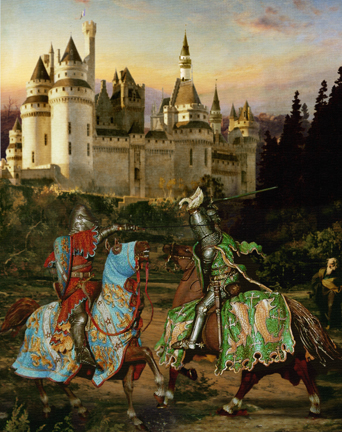
There is also a male side to Avalon, just like we all have a male side ourselves, and it is symbolised in the stories of King Arthur. There are several legends which tell about Arthur and the holy grail in which there is a connection between Avalon and Glastonbury. To us this connection is a symbol for the coming together of two traditions: the old nature religion or the religion of the Goddess and the Christian religion, the religion of God. Masculine and feminine spirituality can not be seen as separate of each other. But in reality that was exactly what the Christian religion try to do, by considering men more important than women. Arthur can be seen as a symbol for the male values: strength, protection, boundaries, analytical thinking and courage. These values are also of great importance for the transforming power of Avalon. The name Arthur can be derived from the Welsh name Arth Fawr, which means great Bear. This name is connected to the most bright star of the Northern hemisphere: Arcturus, indicated by the last two stars from the tail of the Great Bear. Bears existed in England up to the eight century and they had an important spiritual significance for the Celts. It was an honourable name and it gave immense force to bearers of that name.
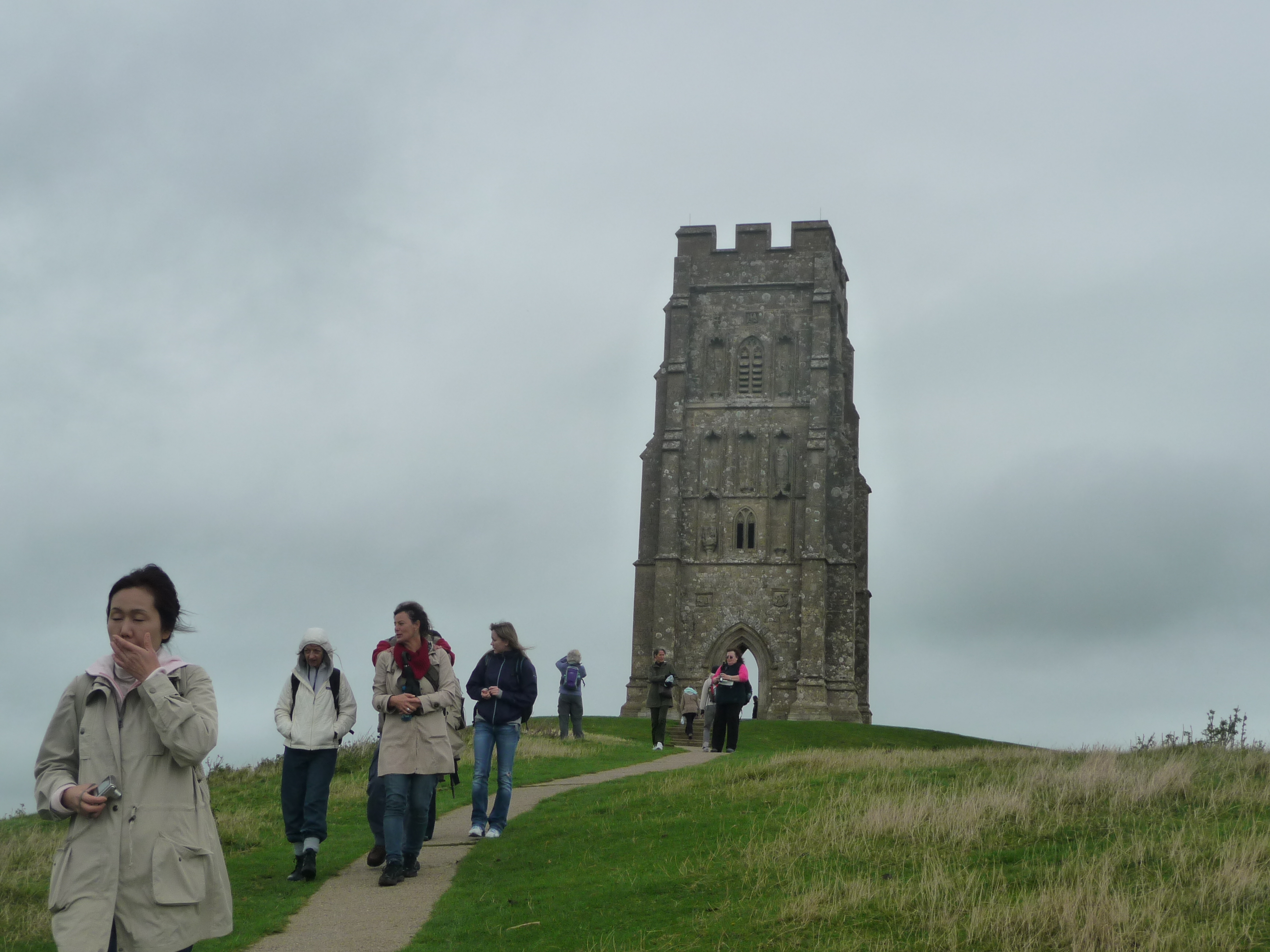
Some places which are to be found in and around Glastonbury, have been mentioned in certain legends of King Arthur. A lake near the place of Meare, is supposed to be the lake where Arthur received the Excalibur sword from the Lady of the Lake. A bridge between Glastonbury and the place Street, called Pomparles bridge, is the spot where the Lady of the lake recovered the sword. Beckery Island, is the spot where Arthur had a religious experience in the vault of Chapel Perilous. On the Tor, Arthur had a fort and his biggest opponent had a fort near Brent Knoll. His castle Camelot stood in South Cadbury, not far from Glastonbury and Arthur’s grave was in the Abbey in Glastonbury.
Arthur legends
The legends are not very old, but they indicate that Glastonbury and surroundings were important for the myth of Arthur. There are of course other spots in the United Kingdom of which is claimed that Camelot stood there, but nothing has ever been proven. Therefore belief what you yourself want to believe. A number of legends I would like to mention, in order to give an impression of the tales which are there:
One of the oldest tales which exist, links King Arthur with Glastonbury and this tale has been told by a monk of Llancarfan, called Caradoc which in his book ‘Life of Gildas’. In this tale he wrote that Guinevere was kidnapped by king Melwas, the king of the summer country (Somerset). He held her in Glastonbury and Arthur came with his soldiers from Devon and Cornwall to save her. However because of the water that surrounded Glastonbury, Arthur could not do much. Eventually the dispute was settled by closing a compromise in the Saint Mary Church and Arthur recovered Guinevere.
In a poem from the ‘Book of Taliesin’, Arthur and his entourage enters the kingdom of the Fairies, ruled by the fairy king Gwyn Ap Nudd, to collect the cauldron of wisdom and inspiration. This kingdom, Annwn, is located under the Tor, which was considered to be the castle of the Grail. The Tor is a well known hill, located in Glastonbury. The cauldron and the grail are seen by the author, to be the same thing and this can be related to the ancient rituals of fertility which were held on the Tor. The cauldron stands for fertility and abundance. It is said that if you see a rainbow over the Tor, that somebody has found the holy grail.

In one legend, a dying Arthur was taken in a boat to the Isle of Avalon. He was accompanied by the three queens of the fairies: Queen Northgalis, Queen of the lost lands and Morgan La Fey, Arthur’s half sister. She is also called Morgan the Faery or Morgan the Fate, keeper of our destiny. It is her responsibility to guide all the passed souls to the other world. The name Morgan or Morgen, derives morst probably, from the Irish name Morrigan or Mor rigan, which means Great Queen. Morgen in welsh means: Mother. In Italy she is called Fata Morgana and there she lives under water of a lake.
The story that appeals most to me, is written in the book of Marion Bradley-Zimmer: The mists of Avalon, also made into a movie. This book has resonated with me and also many others, in a magical way. The story is about magical power of women. Many women I have met, have been touched by the magic of Avalon, just by reading the book. I meet them regularly in Glastonbury or at Goddess ceremonies.